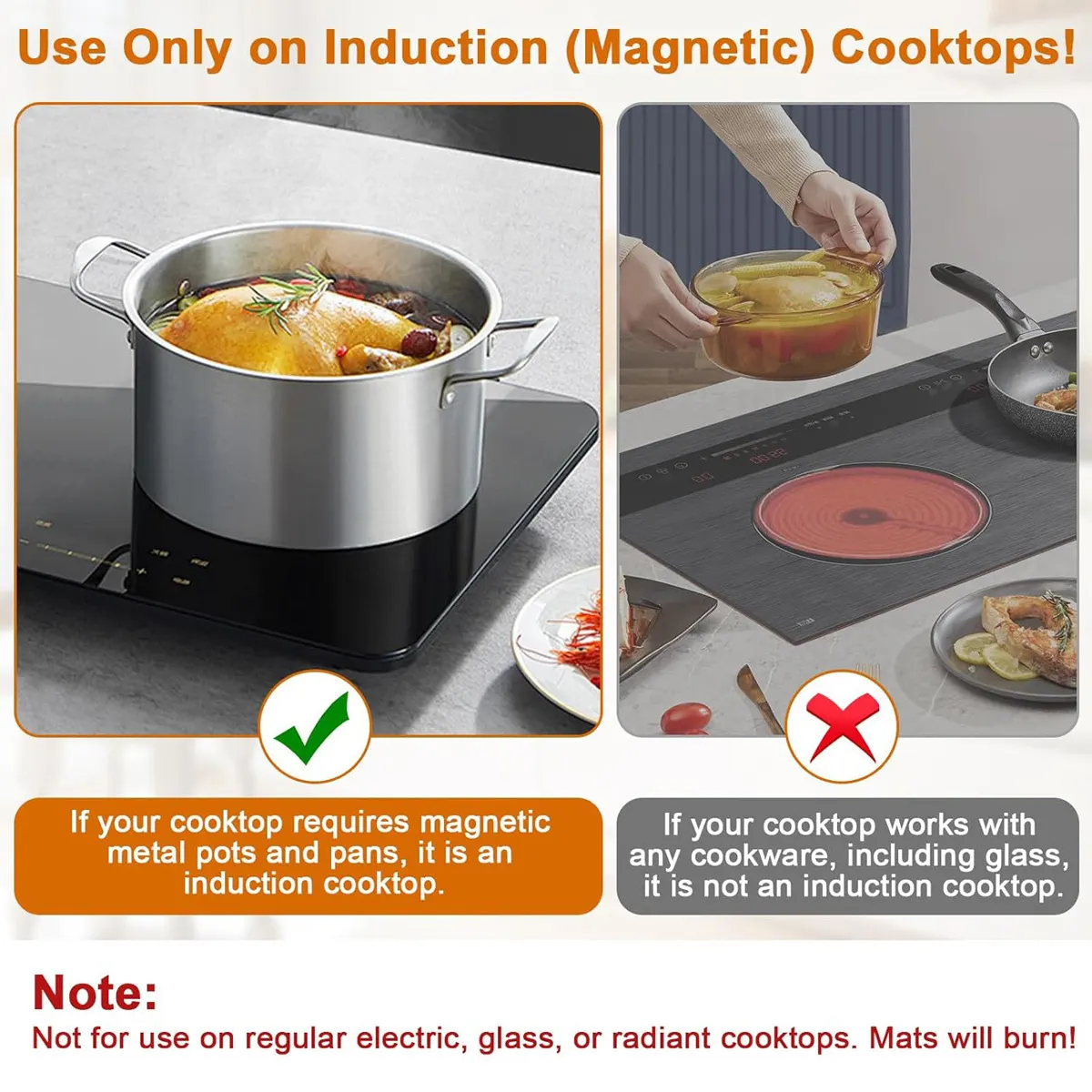
Start with your hob instructions before choosing silicone induction hob mats

Product setup views

The quickest sensible step is to find your induction hob manual or the manufacturer’s current support guidance and check whether it permits any protective mat or cover. Do this before measuring the product or placing an order. A silicone mat may look like a straightforward way to reduce contact between cookware and a glass surface, but the product information does not establish that it can remain in place while cooking, withstand heat, or preserve normal pan detection. For a cautious buyer, appliance guidance comes first and the product listing comes second.

This matters particularly in a UK kitchen where a hob may be fitted into a worktop and covered with a splashback, extractor or other fixed equipment. If the manual prohibits mats, the practical answer is not to force a match because the set has the right number of pieces. If your instructions allow a removable cover, define the intended job clearly: covering the hob when it is switched off and cool, rather than placing cookware on top of a mat during cooking. That distinction prevents an attractive accessory from being used beyond the facts supplied.

Match the five-piece set to a named kitchen layout

The documented set contains five black silicone pieces: three round mats measuring 22 cm, one round mat measuring 24 cm, and one rectangle measuring 35 × 25 cm. Its stated thickness is 0.7 mm. That combination may suit someone organising coverage around separate round cooking zones and a rectangular section, but the dimensions do not prove that every piece will align with your particular hob. Induction layouts vary, so measure the visible glass area and the zones you want to cover rather than assuming a standard arrangement.

At a packing bench or in a busy studio kitchen, the rectangular piece may appear useful for a different part of the surface, but the same fit question applies. Check whether the rectangle would sit fully within the area you intend to cover and whether controls, edges or fixed trim would be obstructed. For the round pieces, compare the 22 cm and 24 cm diameters with the circles marked on your hob. The set’s mixed sizes are a documented convenience, not a promise that they correspond exactly to your appliance’s zones.

Separate confirmed product facts from unanswered suitability questions

Several details are clear. This is a five-piece set, it is black, the listed material is silicone, and the selected thickness is 0.7 mm. The pack image shows hanging holes, which may be useful if you want to store the pieces away from the hob between uses. The listed configuration is fixed at three 22 cm round mats, one 24 cm round mat and one 35 × 25 cm rectangle. These are the facts you can use for a straightforward size and storage check.

Other questions remain unanswered in the supplied product information. There is no heat-resistance rating, no dishwasher claim and no documented evidence about induction operation, pan detection, melting, adhesion or odour. There is also no basis for saying that the mats are suitable during cooking. Do not fill those gaps with assumptions about silicone. Material alone does not tell you the temperature limit or how an accessory behaves on a particular glass hob. If one of those points determines your purchase, ask for documented information or choose not to proceed.

Identify the main mismatches before putting a mat on the hob

The most important mismatch is between a removable cover and a cooking accessory. The supplied description presents the product as a protector mat set, while the scenario for this search treats it as a cover for use when the hob is off. Nothing in the documented facts supports leaving a mat underneath a pan, switching the hob on with a mat in place, or claiming that heating will work normally through it. A buyer wanting a heat-rated cooking surface needs information that this listing does not provide.

A second mismatch is between the set’s dimensions and the buyer’s actual surface. A 22 cm circle may be too small or too large for the area you want to cover, and the 35 × 25 cm rectangle may not suit the shape or controls of your hob. A third is cleaning: because dishwasher suitability is not stated, do not assume the mats can go in a dishwasher. If your requirement is a specified heat rating, dishwasher-safe care or proven compatibility with a particular appliance, this set should be treated as unresolved rather than described as meeting it.

Use this pre-purchase check at the kitchen worktop

Work through the decision in order. First, read the hob manual and confirm whether a removable protective mat is permitted. Second, define the use: the documented scenario supports covering a switched-off, fully cool hob, not cooking on the mats. Third, measure the areas you want covered. Compare them with three 22 cm circles, one 24 cm circle and a 35 × 25 cm rectangle. Fourth, confirm that the 0.7 mm thickness and black silicone material fit your expectations for a removable cover.

Fifth, list the unanswered points that could change your decision: heat-resistance rating, dishwasher suitability, effect on pan detection and any instructions about cleaning or storage. Do not treat the hanging holes shown in the archived image as evidence of performance; they only describe the image detail supplied. Finally, retain the product information and check the stated 12-month retailer warranty before purchase. A warranty statement does not amount to approval from your hob manufacturer, so keep those two questions separate.

Decide who should and should not buy this set

This set may be worth considering if you have a glass induction hob, your appliance instructions allow a removable cover, and you want a mixed-size arrangement rather than one large sheet. The documented sizes give you something concrete to measure against, while the silicone material, black colour and 0.7 mm thickness provide a clear description of what is being offered. It may also suit a buyer who wants to remove the pieces before cooking and store them separately, using the hanging holes shown in the archived pack image if convenient.

It is not a good match for someone seeking an accessory to use while the hob is heating, someone who requires a published heat-resistance rating, or someone who needs confirmed dishwasher care. It is also unsuitable as a confident choice where the hob manual rules out protective mats, or where the pieces do not fit without covering controls or extending beyond the intended area. Buyers concerned about pan detection, warranty implications or appliance-specific compatibility should not infer an answer from the word “silicone”; those points need appliance guidance or explicit product documentation.

Take a documented next step rather than guessing

If the measurements and intended use look suitable, keep the next step simple: save the hob model number, consult the current manual, measure each target area, and compare those measurements with the five supplied pieces. Write down any restriction about covers, mats, cleaning or storage. If the manual permits the arrangement and you only need a cover while the hob is off and cool, the product facts give you a clear basis for deciding whether the mixed-size set is relevant.

If the manual is unclear, contact the appliance manufacturer before buying and ask specifically about a removable silicone cover used only when the hob is switched off and cool. Ask the retailer separately for any missing product documentation, especially heat resistance and care instructions. Until those answers are documented, do not use the mats during heating or claim that they protect against every type of mark or damage. A careful check at the kitchen worktop is more useful than a broad promise: confirm permission, confirm fit, confirm the limited use, then decide.