
Short answer: Induction hob scratch protection starts with realistic limits. This five-piece silicone set can cover selected parts of a cool glass surface between cooking sessions, using three 22 cm circles, one 24 cm circle and one 35 × 25 cm rectangle. The pieces are listed as about 0.7 mm thick and include hanging holes. The product page does not publish scratch-test results, impact resistance, heat resistance or a guarantee that covered glass cannot be marked. Keep abrasive debris away, follow the cleaning and accessory guidance for your exact hob, and do not place the mats on an operating zone unless its manufacturer explicitly permits that use.
Define what protection means
The product page uses everyday protection language and describes use between cooking sessions. That supports covering selected glass areas when the hob is cool, but it does not establish resistance to a particular scratch, impact or load.
A truthful expectation is therefore limited: the mat creates a removable layer over the area it covers. The manufacturer does not specify protection efficiency, edge coverage, abrasion testing or a warranty against damage.
| Expectation | Evidence status |
|---|---|
| Selected cool areas can be covered | Supported by the listing |
| Every scratch or impact will be prevented | Manufacturer does not specify |
| Safe beneath cookware on an active zone | Manufacturer does not specify |
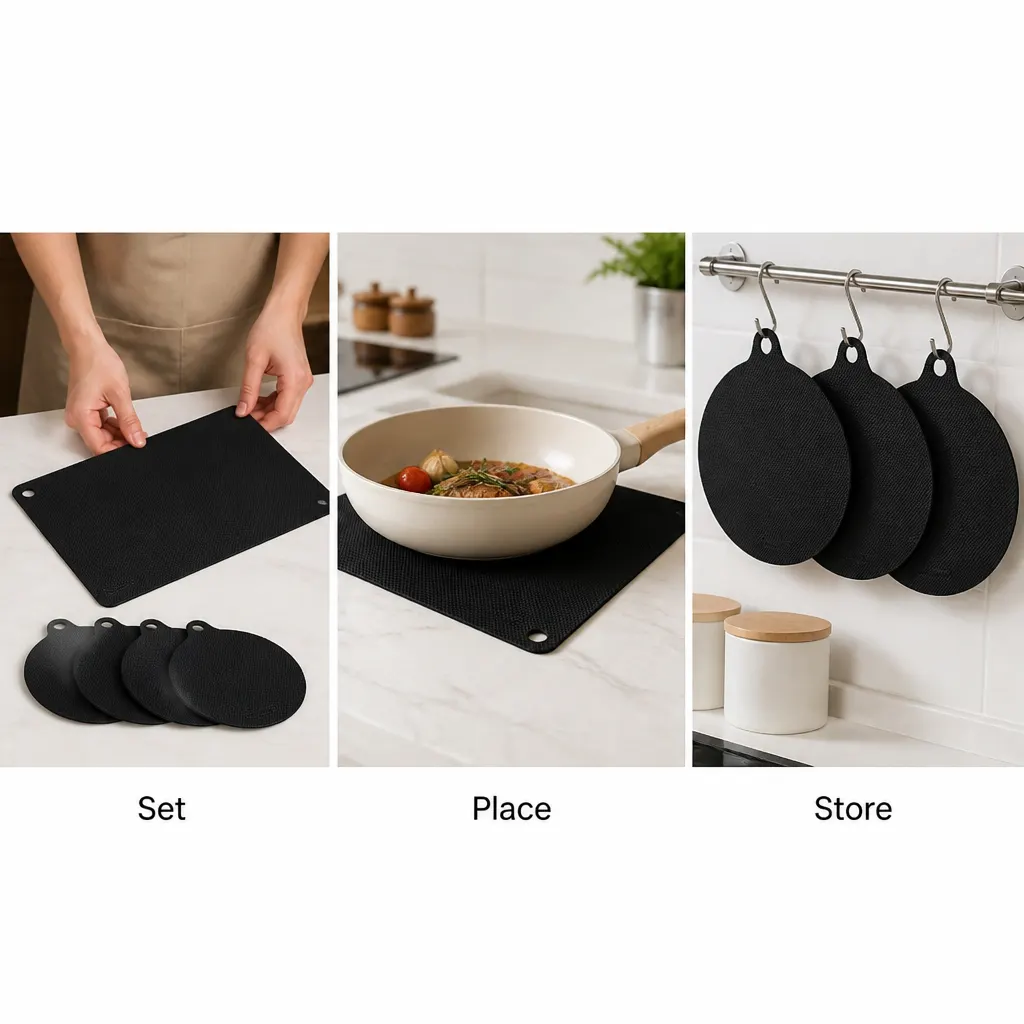
Keep grit out of the arrangement
A cover should not replace the hob maker's cleaning instructions. Before laying removable pieces down, inspect both the glass and mat surfaces so trapped crumbs or abrasive material are not deliberately pressed against the appliance.
The retailer does not publish a cleaning process for these mats. The manufacturer does not specify dishwasher suitability, cleaning chemicals or stain resistance, so use only a care method supported by the seller and your appliance instructions.
- Wait until the hob is switched off and cool.
- Check the glass and both sides of each mat for debris.
- Place only the pieces that fit without covering controls.
- Remove and store them before the next cooking session.
Check the appliance instructions first
Electrolux advises against protective mats and other materials on its induction hob surfaces, noting possible adverse effects during use. That advice applies to Electrolux products and illustrates why a universal compatibility claim would be unsafe.
Read the manual for the exact hob and follow its accessory guidance. The mat retailer does not specify active induction compatibility, pan detection, temperature limits or use beneath cookware.
Choose the pack by coverage pattern
The set offers three 22 cm circles, one 24 cm circle and a 35 × 25 cm rectangle. These dimensions may suit selected zones or open glass areas, while gaps will remain on many layouts.
Choose it if the measured pieces suit cool between-session coverage and the appliance maker permits the arrangement. Choose a different approach if you need continuous coverage, heated use or independently documented protection performance.
Related guides and product details
Use measured, clean covers as a limited between-session layer, while keeping the hob manual and the absence of protection test data central to the decision. Read Silicone Hob Mat: A Measure-First UK Kitchen Guide for related guidance. Read Silicone Induction Hob Mats: Compare Sizes and Limits for related guidance. Review the documented specification on the Silicone induction hob protector mat set, 5-piece black product page before ordering.
Sources and safety context
- Supports the material, dimensions, thickness, storage feature and between-session use. Silicone induction hob protector mat product page.
- Supports checking appliance-specific restrictions before placing a mat on an induction hob. Electrolux: Can I put a protection mat on the induction hob?.